Controls & commissioningIntermediate
Commissioning with evidence: what your HVAC trend data should show
Turn schedules, sensor readings and energy data into a practical verification plan for facilities teams and project handover.
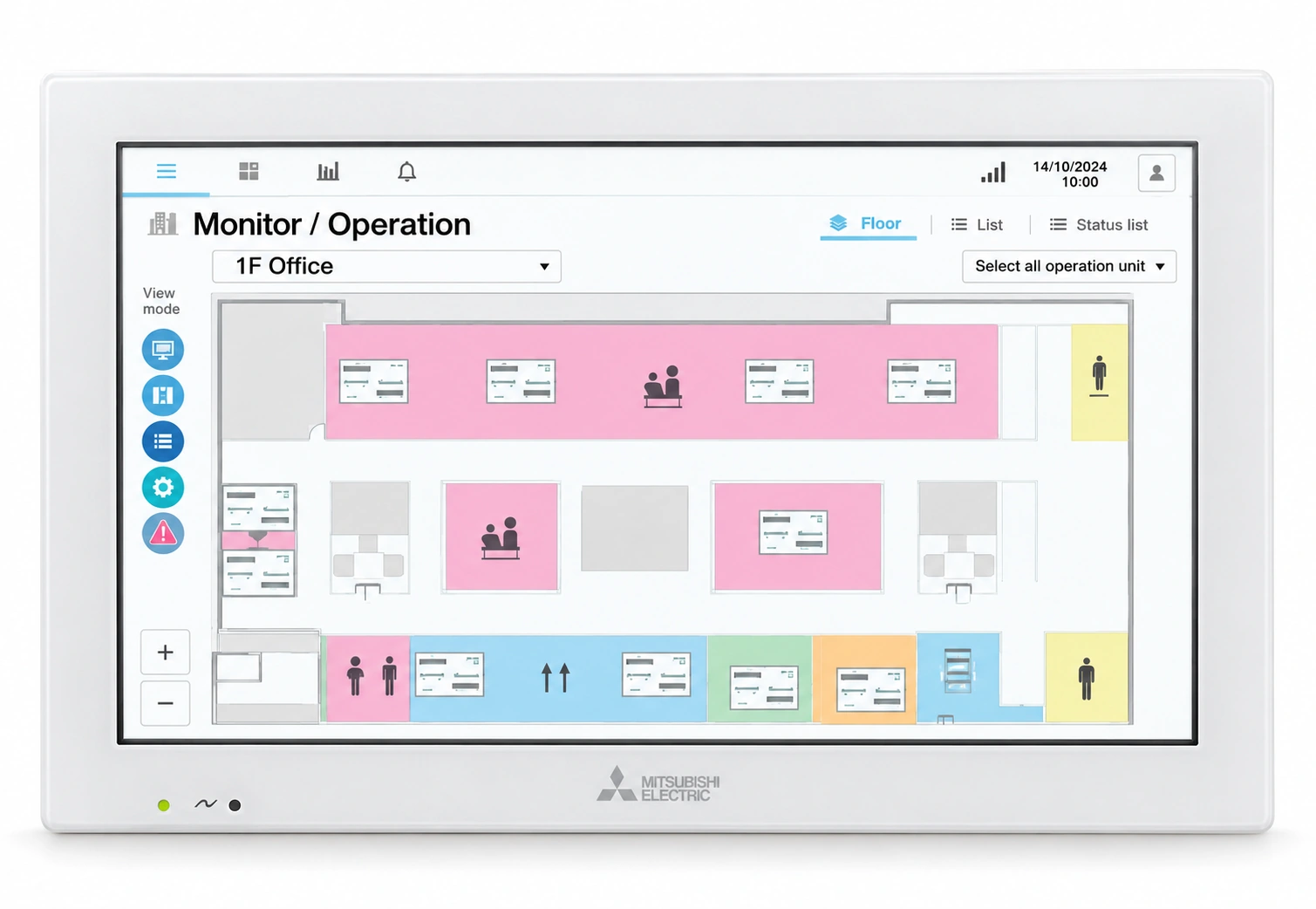
A successful start-up confirms that equipment can operate. Commissioning goes further: it checks that the installed system meets the agreed operating intent. For a multi-zone building, that means proving schedules, local adjustments, ventilation coordination and fault responses as well as cooling performance. Trend data helps connect an occupant complaint or energy change to what the system was actually doing.
Agree the sequence, select the measurements, test representative operating states and keep a baseline. A dashboard is useful only when its data can answer a defined question.
Write a sequence that can be tested
Describe occupied and unoccupied operation, start-up, local overrides, ventilation enablement and the response to a communications or power interruption. Give each control decision a clear owner. For example, specify whether a local after-hours request has an expiry time and which associated ventilation equipment must run with it.
Convert the sequence into observable tests. Rather than writing “check scheduling”, define the expected start and stop times, the affected groups and the allowable exceptions. Agree acceptance criteria and responsibilities before witnessing tests so that a disagreement is resolved against the brief, not against someone’s preferred settings.
Further reading: US Department of Energy: HVAC commissioning
Choose data points around the question
Choose a logging interval that resolves the behaviour being tested. Five-minute trends may help assess schedules and slow room response, but they can miss brief cycling or transient faults. Use faster event or service data where needed. Synchronise clocks and check sensor plausibility before interpreting a chart.
| Question | Useful evidence | What to investigate |
|---|---|---|
| Does the system follow the schedule? | Time, enable state, override state and occupied hours | Persistent overrides, clock errors or mismatched groups |
| Is room control stable? | Room temperature, setpoint, operating state and occupancy | Sensor location, load changes or conflicting commands |
| Is moisture being controlled? | Room humidity, outdoor conditions and ventilation state | Outdoor-air treatment and low sensible-load operation |
| Has energy use changed? | Measured kWh, weather, operating hours and occupancy | Comparable periods and the same electrical measurement boundary |
Know what the controller actually measures
City Multi central-control capabilities depend on the controller, connected equipment and configuration. The manufacturer’s catalogue distinguishes control functions, interfaces and energy-related options. Confirm the required points, licences, meters and gateways in the project’s control schedule instead of assuming every displayed value is directly measured.
Operating hours are not electrical energy. An energy allocation based on a shared meter and an allocation method is also different from direct measurement of each zone. Label the data accordingly. For a whole-system comparison, define whether indoor fans, outdoor units and ventilation equipment are all inside the electrical measurement boundary.
Further reading: Mitsubishi Electric: City Multi equipment and control functions
Test transitions as well as steady operation
Occupied start-up
Check that the correct zones and associated ventilation start, and record how conditions develop. Judge pull-down against an agreed requirement and observed starting conditions.
After-hours operation
Verify local requests, their expiry and the return to scheduled operation. Check that one late user does not unintentionally enable an entire floor.
Representative part load
Review periods when only some zones call for cooling. Look for competing settings or persistent complaints before changing central parameters.
Fault and recovery
Use an agreed test procedure to verify alarm routing and recovery behaviour. Keep interruption tests coordinated with the occupants and responsible technical team.
Keep a baseline that the next team can use
Handover should include the final point list, control sequence, configuration records, measured airflow results, outstanding issues and representative trend exports. Attach dates and the operating conditions for each test. A screenshot without context is difficult to compare with later performance.
After changes, compare like-for-like periods and account for weather, occupancy and operating hours. Document what changed and review whether the intended result occurred. Avoid attributing a lower bill to a control adjustment if occupancy or the measurement boundary changed at the same time. This turns commissioning into an ongoing operating practice rather than a one-time collection of forms.
Further reading: US Department of Energy: screening buildings for re-tuning using operating data
Compare products and request advice
Open the product range linked below to compare specifications. For selection advice, send your floor plan, room use and proposed model codes.
Explore City Multi controllersAsk us a question